
What's this? Why are you so angry, Amy? Oh, you're only practising a sour look because soon you're having a photo taken with the family you live with in the past?And they told you it's inappropriate to smile when the picture is being taken?
Okay, let's look at why this is so in the 19th century.
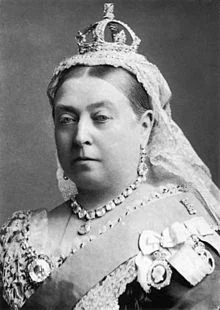
You've probably noticed that people in the 1800s are actually fond of creating fun and filling their lives with "gaiety" (as they would call it), but you'd never know it from the pictures taken during this time. Everyone looks very gloomy and sad.

I think you need to remember that having a photograph taken in the 19th century is considered a very important occasion; it is a rarity, perhaps a once in a lifetime event, and It isn't at all like the present where photos are snapped constantly.
Painted portraits are the norm in the mid 1800s as I'm sure you've noticed, and you must also have observed that the people in the portraits are painted with serious expressions. Perhaps this is one reason you're being told not to smile: it's the norm.
Another theory is that no one smiled because of the long exposure times needed for the camera to take a photo - up to fifteen minutes in some cases. This means the subjects in the picture need to remain perfectly still for this amount of time.
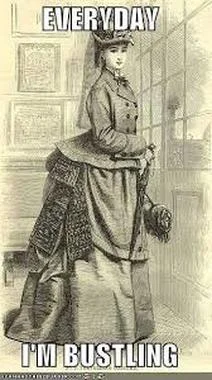
Sounds like a long time to just sit like you're frozen?
Oh, I think you can cope with fifteen minutes of sitting totally still, can't you?
Maybe this all started in the 17th century. Here is a quote by St. Jean-Baptiste De La Salle in the year 1703, from The Rules of Christian Decorum and Civility: "There are some people who raise their upper lip so high that their teeth are almost entirely visible. This is entirely contradictory to decorum, which forbids you to allow your teeth to be uncovered, since nature gave us lips to conceal them".
Another theory is that people didn't want to smile because they didn't want to reveal the bad state of their teeth due to wear, cavities or loss. But bad teeth are considered very normal in 1867, and not distracting from the general attractiveness of a person.
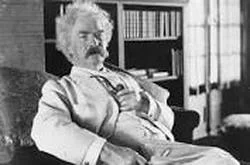
Mark Twain is quoted as saying, "A photograph is a most important document, and there is nothing more damning to go down to posterity than a silly, foolish smile caught and fixed forever".
So, you can see that it is an old-fashioned way of thinking.
In the early 1900s when personal cameras become popular, it will be acceptable to look happy and full of life in a photograph. Smiles will become the expected expression.
And now you know. Just don't say cheese! when you sit for this photograph.