For heaven's sake, Amy. Why are you bothering me so late at night? What's the emergency now? I thought you were getting settled in the house you ran away to. You know, the house above the store? The one you went to without letting the master and lady of the incredibly beautiful, awesome, upper-class house I put you in know you were leaving them for? Hmm? *much sarcasm*
Ya, well this house is sure creeeepy now that Charlotte's not here. Didn't she think I'd come back? I even told her I'd get in touch somehow. How could she just take off with George and like, marry him? It's just me and the husband and wife who own this place that are here after the store closes.
For sure it's crazy haunted.
Aww, c'mon.
You know it's just your imagination. It's all in your head. Trust me.
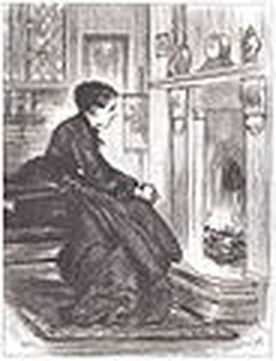
No, it isn't! I swear I saw a ghost downstairs tonight standing beside the lady. I went downstairs to say goodnight and the room suddenly got cold. And that's when I saw something all see-through and floaty, like a reflection or something. And then the lady must've felt the cold too, cause she went and sat right in front of the fireplace. Don't you believe me? What the frig am I gonna do?
You are simply going to calm down and skip this whole idea of the house being haunted. There's no such thing as ghosts. Stop being so silly and go to bed. Everything will seem better in the morning.
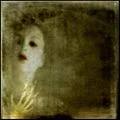
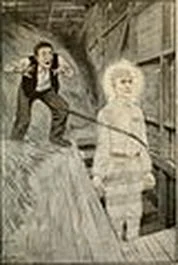
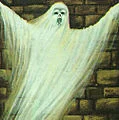
The notion of ghosts is universal. There were times in ancient culture when a popular belief was held that the human soul could come back as an animal. But in modern times, the belief is mainly held that an exact reproduction of the deceased person wearing the same items of clothing at the time of death, can somehow prevail.
Because the idea of a deceased person existing in spirit is considered unnatural, fear is a common reaction. The fear of spirits or ghosts is a normal emotion in the 19th century (when you currently exist), and will continue into modern times, heightened by the presence of horror movies and books relating to creepy supernatural experiences.
In the 1800s, Christmas Eve has become an especially popular time to tell scary stories with family gathered around the fireplace. And because these houses have creaks from wooden floorboards and squeals from wayward rodents, the myth of a vengeful spirit is all the more easily believed. I'm sure you've already noticed the eerie glow at night from the dimly lit gas lamps of the 19th century and the spooky shadows they cast upon the walls of darkened rooms. And how about the narrow spirals of smoke that rise up from these lamps, like unearthly coils of vaporous mist that spiral on and on like a never-ending translucent worm to the ceiling? Frightful. ooooo00000ooooo
Books such as Frankenstein, (1818), and Dr. Jekyll and Mr. Hyde (1886), as well as Oscar Wilde's The Picture of Dorian Gray (1890), all ascribe to the genre of horror in 19th century literature.
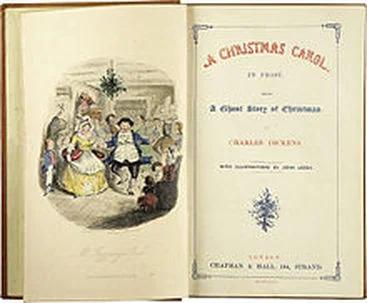
Charles Dickens wrote the famous, and still incredibly popular novella, A Christmas Carol in the 19th century - it was published in 1843.
A Christmas Carol tells the story of Scrooge, whose life is forever altered by the appearance of three ghosts on Christmas Eve: the ghosts of the present, the past, and yet to come.